Ukraine warns satellite limits threaten winter energy defenses
Ukrainian President Zelenskyy warns that satellite communication limits are weakening air defenses, while new strikes impact cities in both Ukraine and Russia.
By News Media House Staff ·
Ukrainian President Volodymyr Zelenskyy has issued a warning that current restrictions on the Starshield satellite communication system are significantly hampering the country's ability to defend its energy infrastructure. Speaking on Sunday, the president stated that these limitations are making it difficult to intercept Russian drones as winter approaches, a season when Moscow has historically targeted the power grid.
The Starshield system is operated by Elon Musk's SpaceX. Zelenskyy explained that Ukrainian interceptor drones frequently lose contact with their operators when traveling at speeds exceeding 161 km/h near the front line or over occupied territory. This loss of signal prevents the interceptors from effectively engaging Russian Shahed drones, creating a vulnerability in the air defense network.
The president expressed hope that the restrictions would be lifted soon, noting that the protection of lives and critical infrastructure depends on this resolution. He instructed the Ministry of Foreign Affairs, the Ministry of Defense, and the Presidential Office to coordinate closely with the United States and SpaceX. Zelenskyy emphasized that it is important for international partners to support Ukraine, stating, "We need to help Ukraine."
Questions remain regarding the technical nature of the issue. On Saturday, Zelenskyy suggested the limitations appeared to be imposed by SpaceX, despite earlier assurances from U.S. Secretary of State Marco Rubio that the system was under greater U.S. government control. This uncertainty has added a layer of diplomatic complexity to the ongoing military cooperation.
Amid these strategic concerns, Russian attacks continued to impact Ukrainian cities. In the port city of Chornomorsk in the Odesa region, a strike injured six people and damaged energy infrastructure. Regional head Oleh Kiper reported that the blast affected a gas pipeline and residential buildings, leaving approximately 41,000 customers without power. The facility struck was operated by DTEK Odesa Electric Networks.
In the southeastern city of Zaporizhzhia, overnight airstrikes resulted in six injuries, including a two-year-old boy, according to Ukraine's State Emergency Service. Zelenskyy noted that Russia launched more than 2,300 drones, 1,590 guided aerial bombs, and 15 missiles against Ukraine over the previous week.
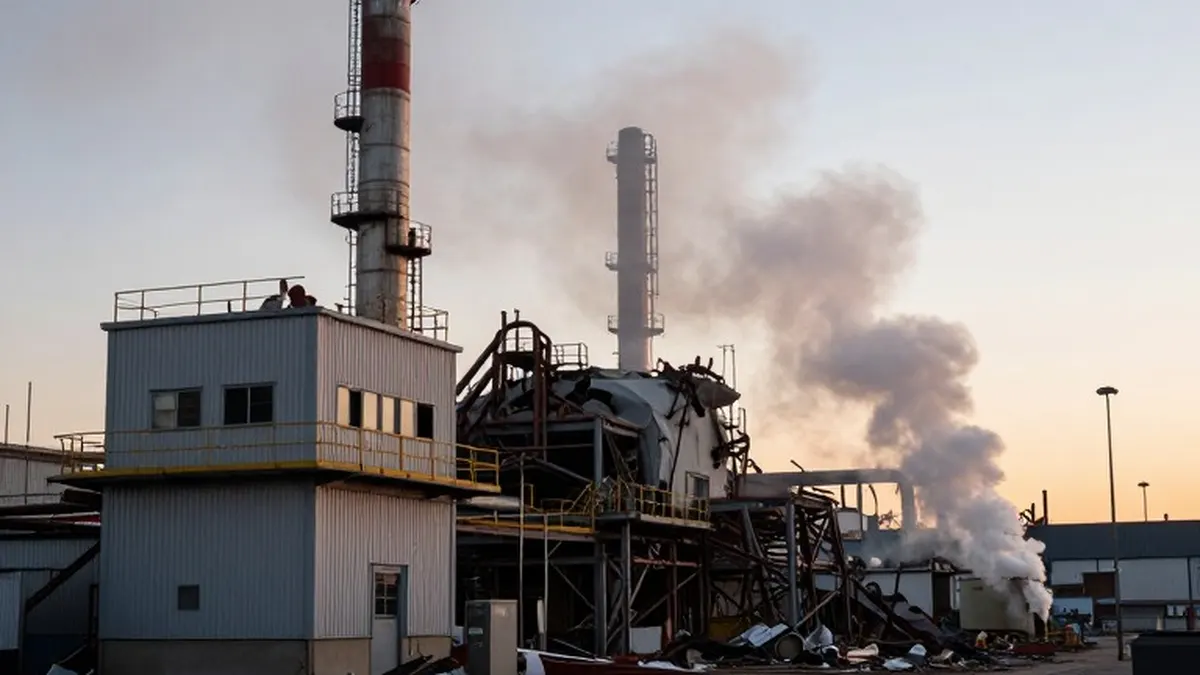
Ukrainian forces also conducted strikes within Russia. In the Rostov region, drone attacks damaged two electrical substations, killing a chief engineer and injuring five others. Ukrainian forces also targeted the Tatarstan region, specifically the city of Nizhnekamsk. The mayor reported that a large-scale attack damaged the industrial zone, disrupting heating and water supplies for parts of the city.
Ukraine's General Staff confirmed hits on two major sites in Nizhnekamsk: the Nizhnekamskneftekhim petrochemical complex and a production site operated by Sibur. An oil refinery in the area was also struck. Meanwhile, the Russian Defense Ministry claimed its forces shot down 533 Ukrainian drones overnight across 13 regions, Crimea, and the Black and Azov seas.
The conflict has also affected maritime security in the Black Sea. Romanian Prime Minister Luca Niculescu announced that three commercial vessels were struck by drones overnight. A Greek-flagged oil tanker caught fire, which was extinguished by the crew, along with fires on two other ships. No casualties were reported. Niculescu called the incidents a violation of international law and a threat to regional security.
In a related diplomatic move, Estonia announced it will close all border crossings with Russia starting December 1. Prime Minister Kristen Michal cited an attempted sabotage of the drone company Threod Systems in Viimsi as a key reason. She stated that closing the border would reduce risks and send a clear message against attacks on Estonia's defense industry. Reports indicate that eight Latvian nationals have been detained in connection with the incident.
Originally published by News Media House