Iraqi Government Targets Militia Stronghold in Oil Smuggling Crackdown
A new anticorruption campaign in Jurf al-Sakhar aims to weaken Iran-linked armed groups through economic pressure rather than direct military conflict.
By News Media House Staff ·
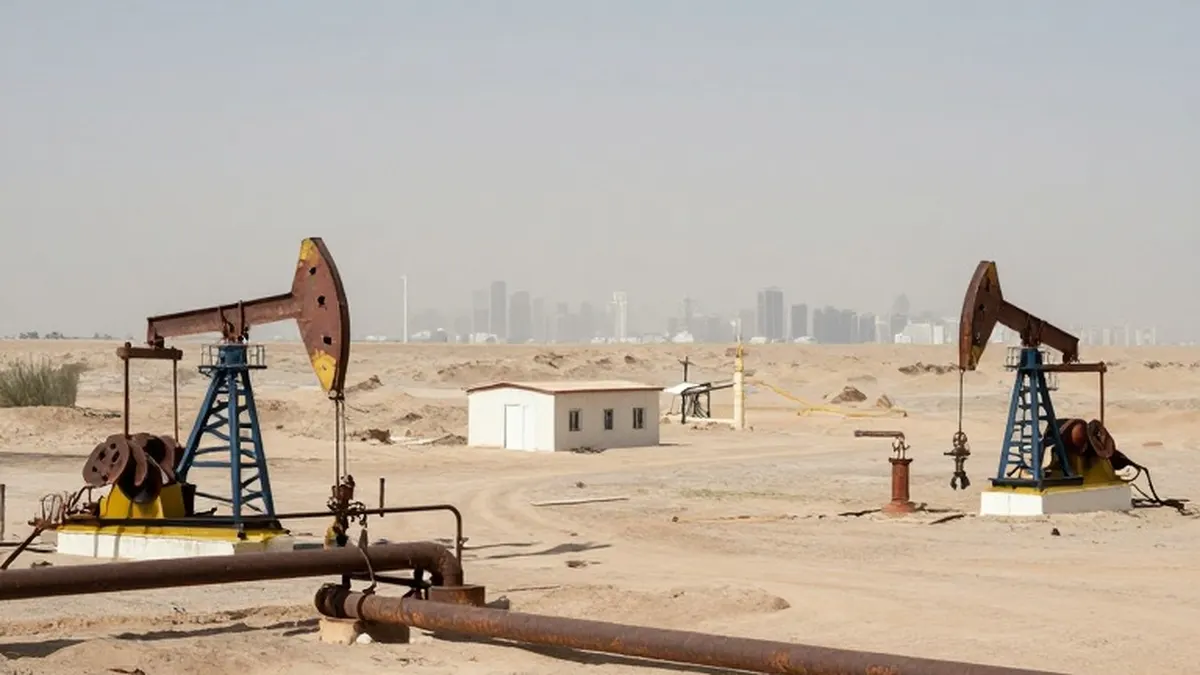
The Iraqi government has initiated a comprehensive anticorruption campaign focused on Jurf al-Sakhar, a region near Baghdad that serves as a stronghold for Iran-linked militias. The operation has resulted in the dismissal and judicial referral of nine senior officials accused of graft. Additionally, high-ranking security directors, the Babil police chief, and the director of the Oil Pipelines Company at the Ministry of Oil have been removed from their posts.
While the government officially describes the initiative as a measure to protect public funds from a pervasive smuggling network, analysts suggest the move is a calculated strategy. The aim is to sever the financial lifelines of armed factions that have resisted integration into the state structure. Jurf al-Sakhar, also known as Jurf al-Nasr, is the central point of this confrontation and is closely associated with the Kataib Hezbollah group, which is believed to have strong ties to Iran.
For more than a decade, the area has allegedly hosted illicit oil refineries. An intelligence report released last week indicated that the region was at the center of a major corruption scheme involving oil revenues and these militias. Following the arrest of other officials accused of corruption, an Iraqi security committee entered Jurf al-Nasr on Friday to investigate. The formerly Sunni-majority area has been considered outside of direct government control since Iraqi militias seized it ten years ago.
Michael Knights, head of Middle East and North Africa research at Horizon Engage, noted that the area's significance is tied to recent developments in Iraq. He explained that Iran-backed militias illegally seized and renamed the town during the 2014 anti-ISIL war, using sectarian cleansing of Sunni residents as cover. The town, located about 60 kilometers from Baghdad, sits at a critical point on the Shia pilgrimage route between the capital and Karbala.
Knights pointed out that Jurf al-Nasr was once home to Saddam Hussein’s military industrial complexes, making it an ideal location for militias to test, build, and hide rockets, drones, and missiles. He stated that if the government gained full control, it could claim a significant victory, similar to taking back the Bekaa Valley from Hezbollah. However, he cautioned that the financial impact on Kataib Hezbollah might be less severe than expected, as the group has other sources of income.
The dismantling of these smuggling networks is viewed as part of a broader effort to bring weapons under state control. After several Iran-linked militias missed a disarmament deadline earlier this year, Prime Minister Ali al-Zaidi is using economic pressure to weaken these groups without engaging in direct confrontation. Security expert Saif Raad described the campaign as a message that no group is above the law, calling it a victory achieved without spilling Iraqi blood.
A key element of the strategy is avoiding a potentially explosive Shia-on-Shia armed conflict. The militia network, which emerged after the US-led invasion and grew during the anti-ISIL campaign, includes groups with diverse political and religious views. To prevent violence, Prime Minister al-Zaidi reportedly coordinated with leaders of the Popular Mobilisation Forces, particularly the Badr Organisation, before launching the arrests and dismissals.
Fadel Abu Ragheef, an Iraqi political analyst, emphasized that leveraging Hadi al-Amiri, leader of the Badr Organisation, was essential to neutralizing threats from other militias. Raad added that focusing on this issue is a fundamental part of strengthening the state project. He noted that the campaign represents a major shift in making the Popular Mobilisation Forces an active part of controlling groups outside government authority.
Political analyst Ali Fadhlallah argued that an internal war between Shia factions is unlikely due to the structural nature of Iraq’s political and religious leadership. He highlighted the influence of Grand Ayatollah Ali al-Sistani, whose rational religious authority has historically controlled the rhythm of the political process during dangerous times. Fadhlallah stated that the Shia component has many factors that act as a brake against conflict, making a clash unlikely even in difficult circumstances.
Originally published by News Media House