
ASEAN summit opens in Manila with global conflicts high on agenda
Southeast Asian leaders began talks on Sunday focused on international conflicts and their economic impact, with U.S. President Donald Trump expected to arrive Tuesday.
By News Media House Staff ·
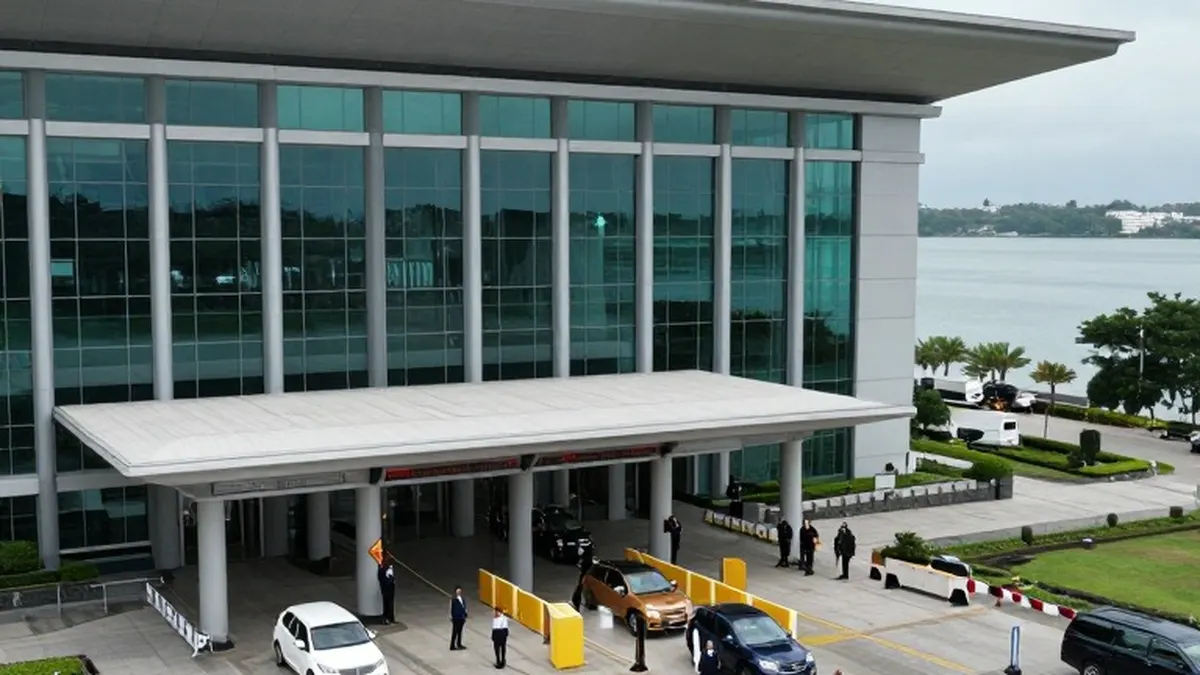
Leaders of the Association of Southeast Asian Nations opened their annual summit in Manila on Sunday, November 15, beginning three days of discussions as conflicts and their consequences weigh on the region. Draft communiques reviewed by The Associated Press indicate that the Middle East war will feature prominently in talks involving the bloc and visiting Asian and Western leaders.
The ASEAN leaders are expected to appeal for restraint and peaceful settlements to disputes, including those in the South China Sea and the civil war in Myanmar. Their discussions will also address efforts to protect regional economies and citizens from the continuing effects of global conflicts. A draft statement reaffirms support for international law and the United Nations Charter, alongside freedom of navigation, overflight and lawful passage through international straits.
Opening the summit at a heavily guarded convention center beside Manila Bay, Philippine President Ferdinand Marcos Jr. stressed the importance of unity among the bloc’s 11 members despite their differences. He cited geopolitical tensions, economic uncertainty, emerging technologies, climate change and cross-border threats as challenges changing the region beyond any single country’s ability to respond on its own.
Maintaining that unity remains difficult for an organization whose members include democracies and authoritarian governments, with many aligned with either Washington or Beijing. ASEAN has struggled to deal effectively with persistent regional conflicts, particularly Myanmar’s civil war and the competing claims in the South China Sea.
Philippine officials said U.S. President Donald Trump and Secretary of State Marco Rubio are expected in Manila on Tuesday afternoon. Their arrival will follow the main ASEAN summit sessions and Marcos’ handover of the bloc’s rotating annual leadership to Singapore. The Asian trip comes after Trump’s Republican Party suffered a defeat in the U.S. midterm elections.
Trump’s schedule includes three key meetings late Tuesday, among them a gathering of the Quadrilateral Security Dialogue, which brings together the United States, Japan, Australia and India. The group is widely viewed as a counterweight to China. Philippine officials said he would also attend a special summit with ASEAN leaders over cocktails.
On Wednesday, Marcos will host Trump at the presidential palace for a red-carpet reception and state luncheon. The two leaders are expected to reaffirm their countries’ decades-old treaty alliance. They will then travel separately to Shenzhen, China, for the APEC summit hosted by Chinese President Xi Jinping.
U.S.-based geopolitical analyst Greg Poling said the Manila visit would reassure American allies and partners before Trump turns his attention to talks with Xi. Poling also said the Republican electoral setback would follow Trump abroad. He assessed that substantive progress in the Trump-Xi discussions was unlikely and that Trump’s weakened political position could leave China less willing to compromise.
China’s premier, Li Qiang, will represent Beijing at the Manila gathering. Philippine officials said he is scheduled to meet ASEAN leaders on Monday and depart before Trump reaches the Philippine capital.
Originally published by News Media House
More News · National news · Report a business · Got a Story?